If you live in Sedona, you know that Arizona weather can be full of surprises. From summer monsoon storms and triple-digit temperatures to winter snow covering the red rocks, our weather is one of the things that makes living in Northern Arizona so interesting. Learn more about Sedona weather at Sedona-Weather.com.
As we head into the fall of 2026, an important change in the Pacific Ocean could influence Arizona's weather over the coming months: El Niño is strengthening.
According to NOAA's Climate Prediction Center, El Niño conditions are present and are expected to strengthen as we move through the fall and toward the winter of 2026–27.
El Niño doesn't guarantee a particular type of weather in Sedona. Instead, it changes the probabilities of certain weather patterns—an important distinction when looking at seasonal forecasts.
What Is El Niño?
El Niño develops when surface waters across portions of the tropical Pacific Ocean become unusually warm. That enormous area of warm water can alter atmospheric circulation and influence weather patterns thousands of miles away.
For Arizona, the effects often become more interesting as we move from fall into winter. A stronger subtropical jet stream can sometimes direct more Pacific storms across the southern United States and into the Southwest.
That raises the obvious question for those of us in Sedona: Could we be headed toward a wetter fall and winter?
What Are Forecasters Expecting This Fall?
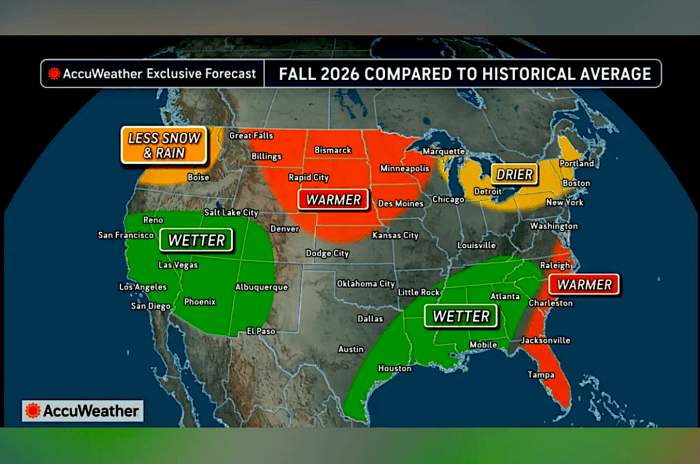
Caption: AccuWeather's Fall 2026 forecast favors wetter-than-average conditions across much of Arizona and the Southwest. Source: AccuWeather.
The AccuWeather Fall 2026 outlook provides a good visual overview. Notice the large green "Wetter" area covering much of Arizona, New Mexico, Nevada, and portions of California and Utah.
That doesn't mean it will rain constantly. Seasonal forecasts compare an entire period with historical averages, so individual weeks can still be very dry.
NOAA's outlook offers another way to view those probabilities.
Arizona Has Increased Odds of a Wetter Fall
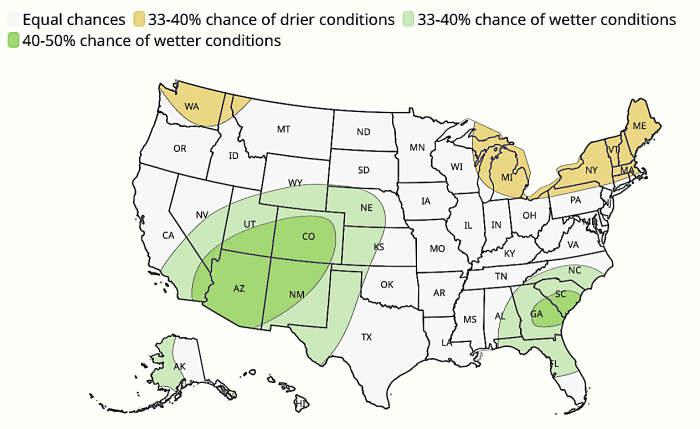
Caption: NOAA's seasonal precipitation outlook shows a 40–50% probability of wetter-than-normal conditions across much of Arizona. Source: NOAA Climate Prediction Center.
This is probably the most important graphic in this article.
Much of Arizona falls within NOAA's darker green area, indicating a 40–50% probability of above-normal precipitation. The lighter green surrounding area represents a 33–40% probability.
Remember, a 40–50% probability does not mean Arizona will receive 40–50% more rain. It means the odds favor the season falling into NOAA's above-normal precipitation category.
For Sedona and Northern Arizona, that's certainly something worth watching as we move deeper into fall. I have very accurate weather stats going back to 2010. This makes it easy to identify trends.
But Don't Put Away the Shorts Yet!
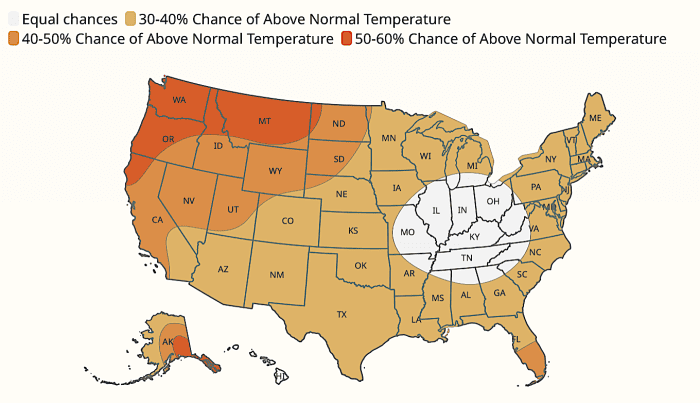
Caption: NOAA's seasonal temperature outlook continues to favor above-normal temperatures across Arizona and much of the western United States. Source: NOAA Climate Prediction Center.
The precipitation forecast tells only half the story.
NOAA also favors above-normal temperatures for Arizona during the period. In other words, a wetter pattern doesn't necessarily mean a colder one.
That's particularly interesting following Sedona's exceptionally warm 2026. At our local Sedona weather station, August finished with an average temperature of 81.9°, the warmest August we've recorded since 2010.
Could Sedona Have a Wetter Winter?
Possibly—and that's what we'll be watching closely.
Historically, El Niño can favor a more active southern storm track, increasing the chances of Pacific storms reaching California and the Southwest. As El Niño strengthens, its influence on North American weather generally becomes more important in winter.
For Sedona, additional moisture could arrive as rain or, when temperatures and storm tracks line up correctly, snow.
Of course, El Niño doesn't guarantee a wet or snowy winter. Individual storms, temperatures, and the exact position of the jet stream ultimately determine what happens here. I can tell you that my son, who is a former USASA Slopestyle National Champion, is hoping for lots of snow at Snowbowl. For the rest of us who do not snowboard, we need the snowpack. We are all looking for a huge snowpack this year to help refill our reservoirs.
But that's part of what makes Sedona weather so interesting.
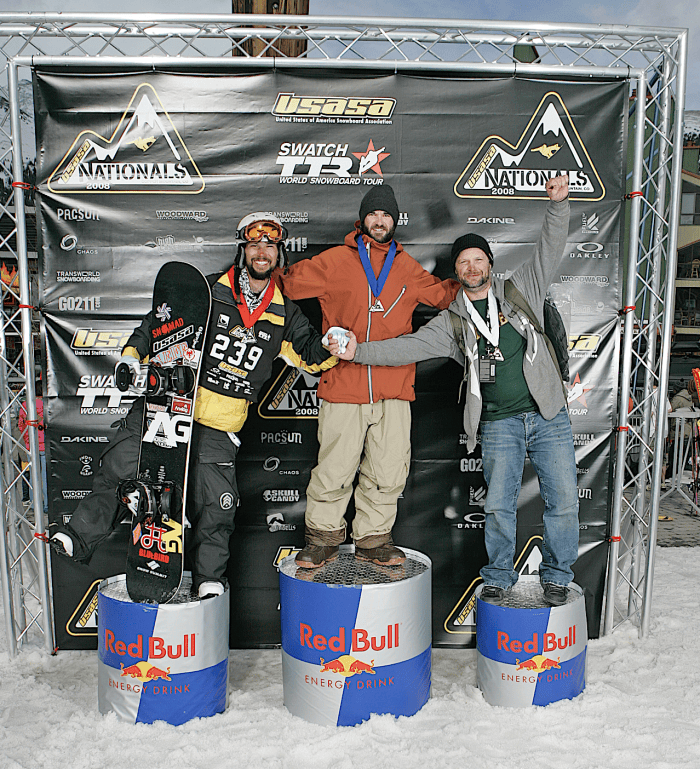
Caption: Copper Mountain Colorado - Podium - Nationals - Slopestyle - 2008 - Rick M. Sperry - National Slopestyle Champion
Watching the Weather From Sedona
One of the pleasures of living in Sedona is experiencing four distinct but mild, seasons while enjoying Arizona sunshine for much of the year. A strengthening El Niño adds another interesting chapter to our constantly changing high-desert weather.
We'll be watching closely as fall progresses and winter approaches.
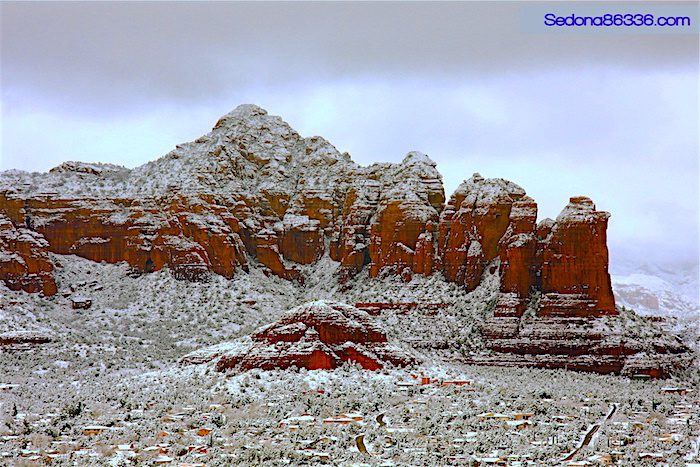
And if we wake up to those spectacular red rocks covered in fresh snow this winter, El Niño may have helped set the stage...
;)